Fourteen years ago, I recorded a series of business technology videos covering a wide range of topics, from workstations versus PC selection to cybercrime, NAS storage, virtual desktops, servers, and more.
At the time, the conversation around high-performance computing often came down to a simple choice: buy a powerful PC, or invest in a professional workstation. Even then, many businesses underestimated the importance of hardware built specifically for demanding workloads.
Today, in 2026, the workstation market has transformed. Workloads are heavier, AI has become mainstream, and a new class of hardware, NPUs (Neural Processing Units), has emerged. Yet the fundamental message remains the same. If your business depends on reliability, stability, and consistent performance, a workstation is still the smarter investment.
This article compares the original 2012 advice with the market today and explains why workstations remain essential for modern businesses.
The 2012 Perspective: A Clear but Often Overlooked Difference
Back in 2012, the distinction between a high-end PC and a workstation was frequently misunderstood.
Key points from the original video included:
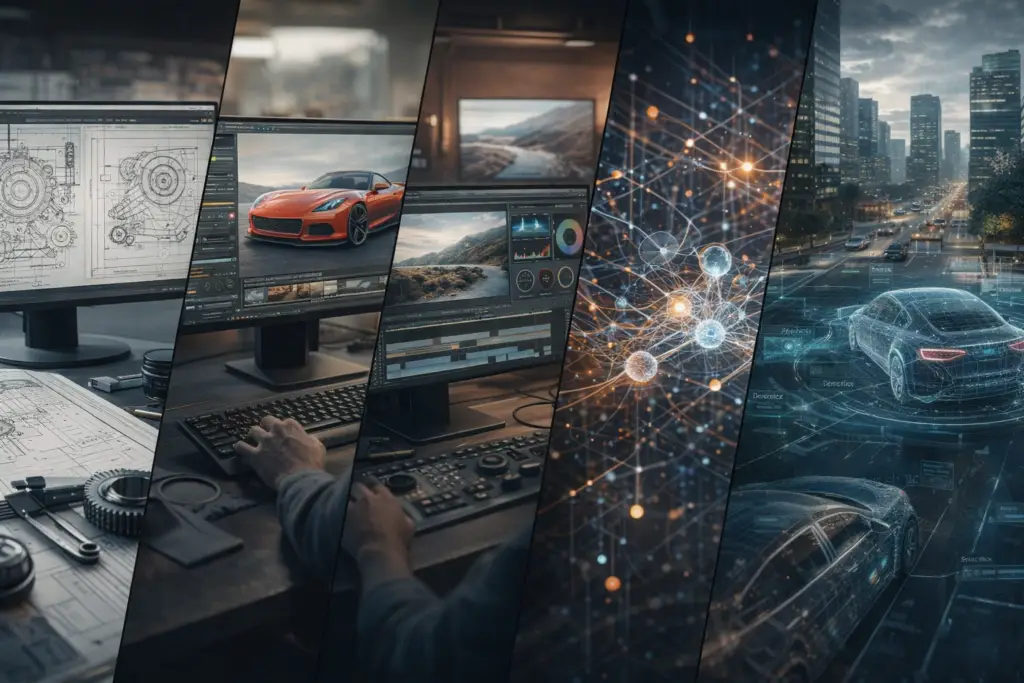
Applications such as CAD, 3D modelling, simulation, and advanced graphics workflows require predictable performance under heavy load. Consumer PCs were simply not engineered for this.
ISV certification was a critical advantage
Certified workstations were tested by software vendors to ensure reliability, stability, and full support. Workstation‑class hardware meant fewer crashes and dramatically reduced downtime.
Hardware reliability mattered more than raw benchmarks
ECC memory, advanced cooling, enterprise component validation, and long lifecycle support separated workstations from high-end desktops.
The message was clear. If your software was mission-critical or downtime would incur real business costs, choosing a workstation was the right call.
The 2026 Market: What’s New, What’s Improved, and What Still Matters
Technology has advanced rapidly, and workstation design has evolved more in the last five years than in the previous decade. The arrival of AI‑accelerated workflows, real‑time simulation, cloud‑integrated processing, and hybrid working has entirely changed expectations.
But the workstation remains the right platform for demanding workloads. Here is how the landscape looks today.
1. Workloads Are Now AI‑Driven and Data‑Intensive
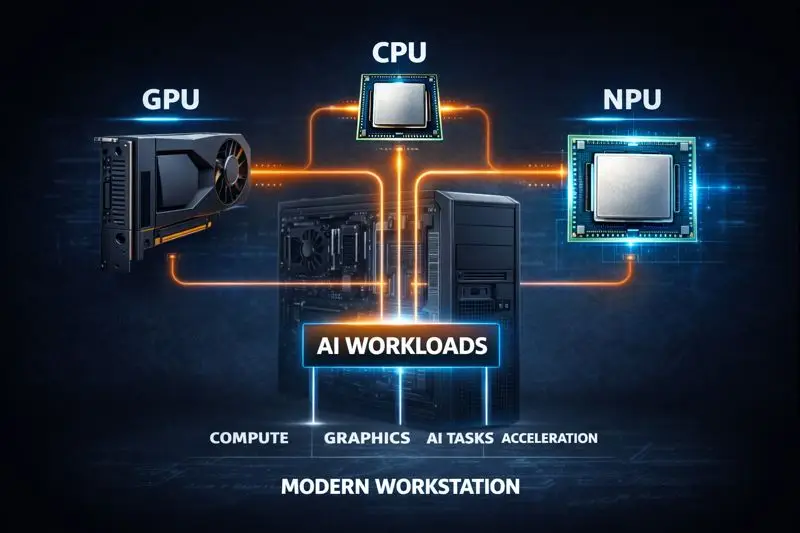
In 2026, many key business processes rely on AI. Designers, engineers, analysts, and creators all run workloads that require specialised compute.
Modern workstation capabilities include:
- High‑core‑count CPUs optimised for multi‑threaded operations
- Professional GPUs for AI, rendering, simulation, and modelling
- Large RAM capacities with ECC as standard in most tiers
- Enterprise NVMe storage capable of sustained high throughput
This performance class far exceeds even top‑end gaming PCs, which are designed for burst performance rather than sustained professional workloads.
2. The Biggest Evolution: NPUs in Modern Workstations
One of the most significant changes between 2012 and today is the incorporation of NPUs (Neural Processing Units) into workstation architecture.
What NPUs bring to 2026 workstations:
Dedicated acceleration for AI workloads
Machine learning inference, large language model optimisation, video enhancement, speech processing, and predictive analytics run locally without relying on cloud resources.
Increased energy efficiency
NPUs deliver AI acceleration at a fraction of the power draw of CPUs and GPUs, reducing heat, noise, and running costs.
Better hybrid‑cloud performance
NPUs allow organisations to process sensitive or latency‑critical data locally while offloading larger tasks to the cloud.
Enterprise‑grade optimisation
Professional workstation NPUs offer stronger security, longer lifecycle support, and better tooling than those found in consumer devices.
In 2012, NPUs did not exist. In 2026, they will become a core component of workstation design and a major reason to choose a workstation over a PC.
3. ISV Certification Is More Important Than Ever
Workflows are now more tightly integrated across cloud, desktop, and mobile platforms. Running untested hardware introduces real business risk.
ISV‑certified workstations offer:
- Guaranteed compatibility
- Support from major vendors
- Stable drivers and firmware
- Reduced error rates on complex workloads
This is still something high-end PCs cannot match today.
4. Consumer PCs Have Improved, but Not in the Areas That Matter Most
High-end PCs now offer:
- Better GPUs
- Faster gaming‑optimised CPUs
- Attractive price points
But they still lack:
- ECC memory options
- ISV certification
- Enterprise‑validated components
- Long lifecycle stability
- Professional thermal engineering
On paper, specs look closer than ever. In practice, the performance gap under professional load is larger than it was in 2012.
What This Means for Businesses in 2026
Businesses that rely on consistent performance, data accuracy, or professional‑grade software will benefit more than ever from choosing a workstation. The addition of NPUs also positions workstations as the most capable on‑premise platforms for AI workloads.
If your organisation works with:
- CAD or 3D modelling
- Video production, VFX, or rendering
- Simulation and engineering workloads
- AI or machine learning models
- Massive datasets or real‑time analytics
…a modern workstation is not just beneficial, it is essential.
How 127 Media Supports Businesses Today
At 127 Media, we continue to use the same principles that shaped the guidance in that 2012 video:
- Keep the advice clear
- Keep it relevant
- Keep it genuinely useful
We help businesses understand whether they need a workstation, a high-performance PC, a hybrid model, or a cloud‑based compute solution. Our approach is consultative and practical, focused on helping you choose the right hardware for the job, not the most expensive specification.
If your business is reviewing its hardware strategy, or exploring workstation options with NPUs and AI‑ready infrastructure, we are here to help.